First night at a winter hut (Leschaux)
We had been thinking for a long time about going up to a non-guarded hut for the night. Since we were in the mountains in fall, that seemed like a perfect opportunity: the hut would be ungarded but no snow yet, and it probably wouldn’t be very busy either.
We decided on Leschaux, mostly because it is in such a beautiful location and pretty easy to get to (we thought). You just take the Montenvers train, walk up the Mer de Glace and veer left to get to the Leschaux glacier, climb up some ladders, and you’re there! Almost. Here’s how we prepared:
Prep
We had been to Leschaux in the summer a few years ago, so we roughly knew the way to get there. Back then, we had gotten to Leschaux from Couvercle via the Jardin de Talèfre, so following the pretty long access by the hiking trail, and left via the ladders right below to Leschaux to get back to the glacier, so we thought we had used both access ways.
Checking on the website of the refuge, we learned that there are blankets there and roughly nothing else, including no water. But we both had a memory of a stream pretty close to the refuge in summer, so we weren’t sure if that might not still be there. There was also a note about avalanche equipment being absolutely necessary if there had been any snow in the mountains, which there had been, at some 3500m (so way above Leschaux).
Office de Haute Montagne
So, we called Chamoniarde (who run the Office de Haute Montagne) to ask. They didn’t know about the water but told me that there was no gaz, that no avalanche kit was necessary yet, and to take the access by the ladders.
Nice! A few days later, I happened to be in town anyway and went by to ask about where to best cross the Mer de Glace. I learned that there were no special places to cross, but that there is a brand new access between Couvercle and Leschaux, and that we should take that, tell them how it was, and send pictures. Exciting!
And of course, right after I had left the office, my partner noticed that the lift going between Montenvers and the glacier wasn’t running yet. We knew that there was a via ferrata that you could take to get to the same place but we’d never done it and weren’ sure how hard it was. So, he called Chamoniarde again and asked how long it takes, and was told that it barely qualifies as a via ferrata, that it’s really more of an alpinist access in case the lift is down, and that it takes half an hour.
Okay, with that, we felt pretty well prepared!
Our pack list
- 7.5l of water for two
- set of base layers to change into (panties, bra, long underpants, longsleeve, socks)
- Atom jacket for me, down + rain jacket for my partner
- glacier kit:
- harness
- helmet (mostly for the ladders)
- crampons
- personal safety-anchor (aka a longe in Frenglish)
- ice screw and micro traxion
- some slings and locking-gate carabiners
- sunglasses
- hiking poles
- toiletries:
- small toothbrushes (heads of our electric toothbrush)
- toothpaste pills
- floss
- sunscreen
- earplugs
- first-aid-kit with extras:
- antihistamines (the huts are sometimes very dusty, which my partner is allergic to)
- blister bandaids
- painkillers
- sleeping bag
- sleeping bag liner (standard for huts)
- toilet paper
- empty dog poop bags for the toilet paper
- Jetboil
- camping food that can be made with hot water
- a small loaf of bread
- some cheese
- a Swiss knife
- nuts
- chocolate
- head lamps
- phones
- phone charger (just in case there is a possibility to charge despite what the website says)
- e-reader
- lip balm
First day
We had a bit of a late start to get to things because we first had to hand our dog over to the dog sitter at 9:30, the next train up to Montenvers was at 10:05, so we got up there around 10:30, then down to the glacier using the via ferrata with some faffing and some chatting with the gendarmes who were having a practice session there, and we stepped onto the glacier around 11:45.
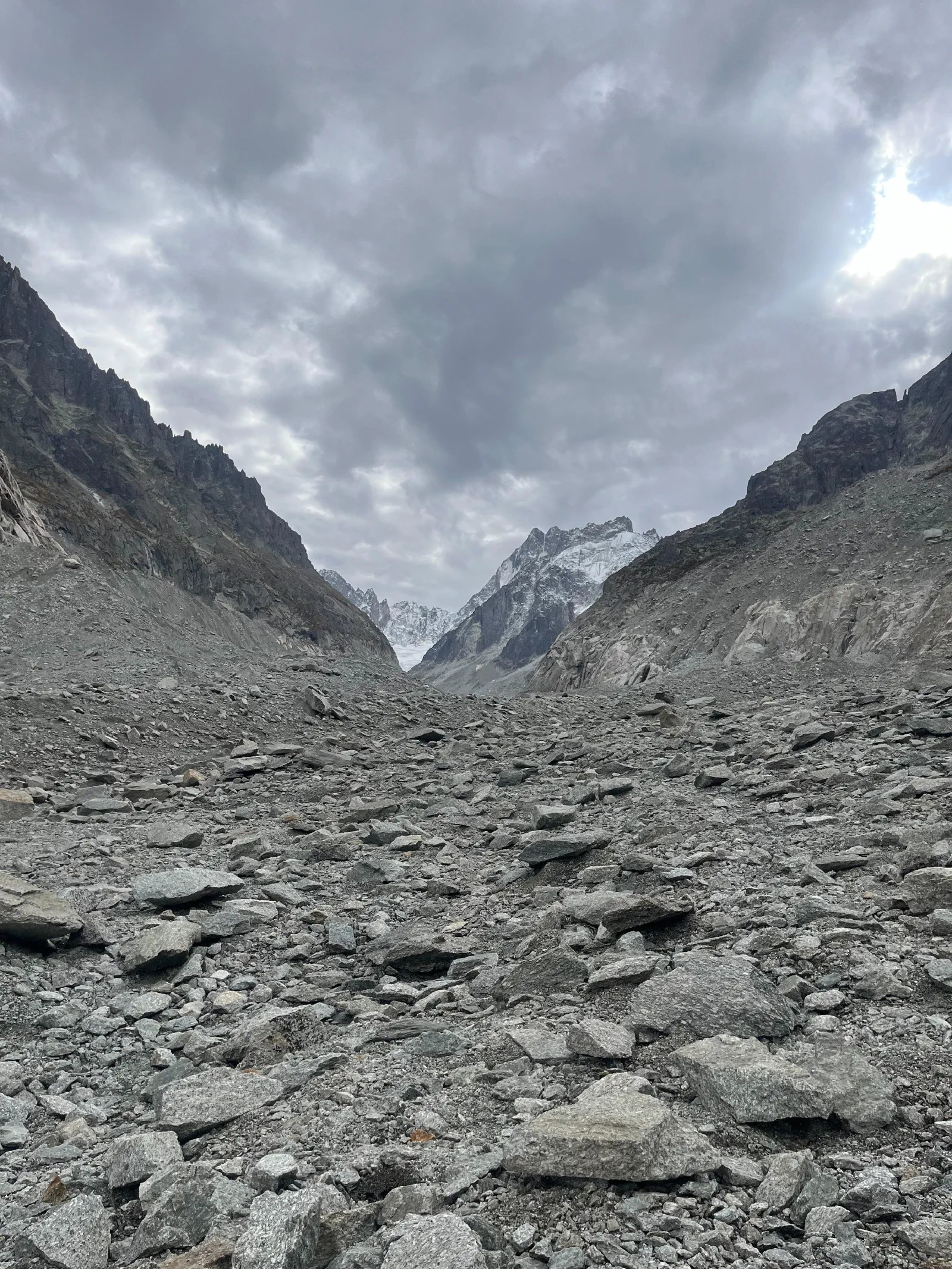
We walked up the Mer de Glace mostly on very rocky parts (which - surprise, surprise - is much less fun than walking on ice) and had a picnic with bread and cheese on a nice rock on the glacier, plus some yummy chocolate from Shouka. We then had some problems finding a good way to get to the Glacier de Leschaux from the Mer de Glace, aka turn left where the two glaciers there unite into one. There were lots of (very open) crevasses in that part, so we did a bunch of zig-zagging to vaguely continue our way until we found an orange pole that looked very much like a trail marker to me.
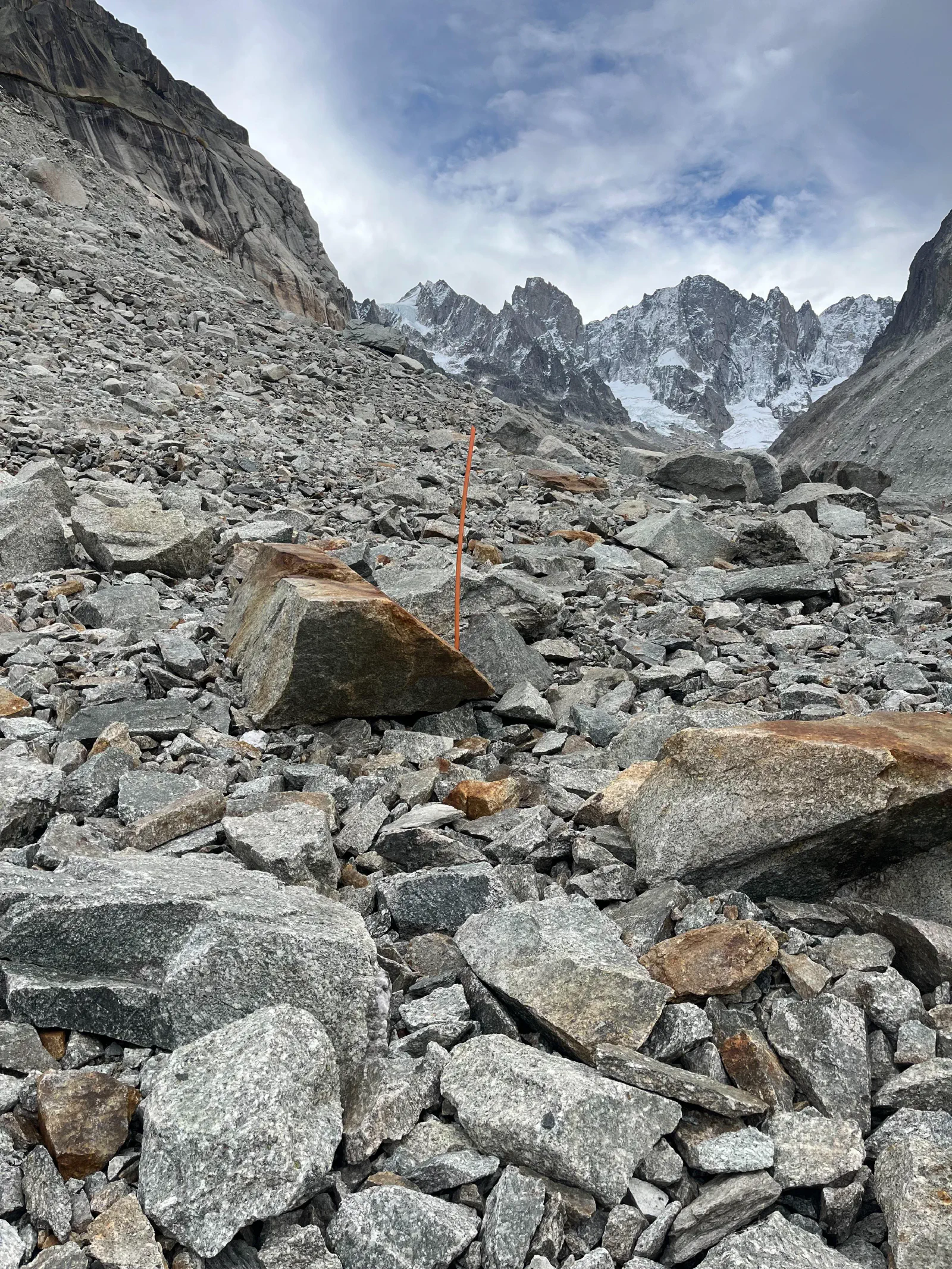
Following those, we got past the very crevassy part at the junction by staying on the far left, on rocky and sometimes slippery terrain. There were also still huge waves there with some crevasses but almost fully covered in rocks so there at least wasn’t that big a risk of falling in, and nowhere near as much walking around crevasses required as when we were trying to go up the middle.
It slowly became time to start looking for the access, and man, did we have a hard time with this. We knew that it starts at 2162 metres, and that it should be somewhere on the big rock face on the left. We did have a satellite image with a drawing of the new access but that turned out to be much less useful than we thought. And we knew that the start wasn’t marked (yet).
So, we spent about an our and a half staring at a wall and getting closer to it at different spots, when I finally saw some fences glistening in the sun, some twenty metres below the lowest we had been looking. And sure enough, getting to right under those fences at that wall, we did finally see the first ladder.
By the way, we spent a good half hour the next day, on the way back down, staring at that wall to try to find the access point now that we knew where it should be. We at no point saw more than those two fences with a ladder between them. Made it all the more fun to try describe the location for Chamoniarde…
Anyway, up those ladders we went, once you were on, the access is very well marked. The ladder steps were huge: as a woman measuring 165 cm, I had to put both feet on each new rung and then stand up. Meaning that I was exhausted after about the first 50 meters of elevation, and pretty frustrated to know that I would have to do the same thing ten times more because the whole shared part of the ladders (to get to both Couvercle and Leschaux) was 554 meters.
But after about 300 meters of elevation, so about half according to the description, we got a fantastic surprise: the description was wrong! The 554 meters is probably all the way to the Couvercle, not to the point where the two paths diverge. Which was good news because it was 6pm by then.
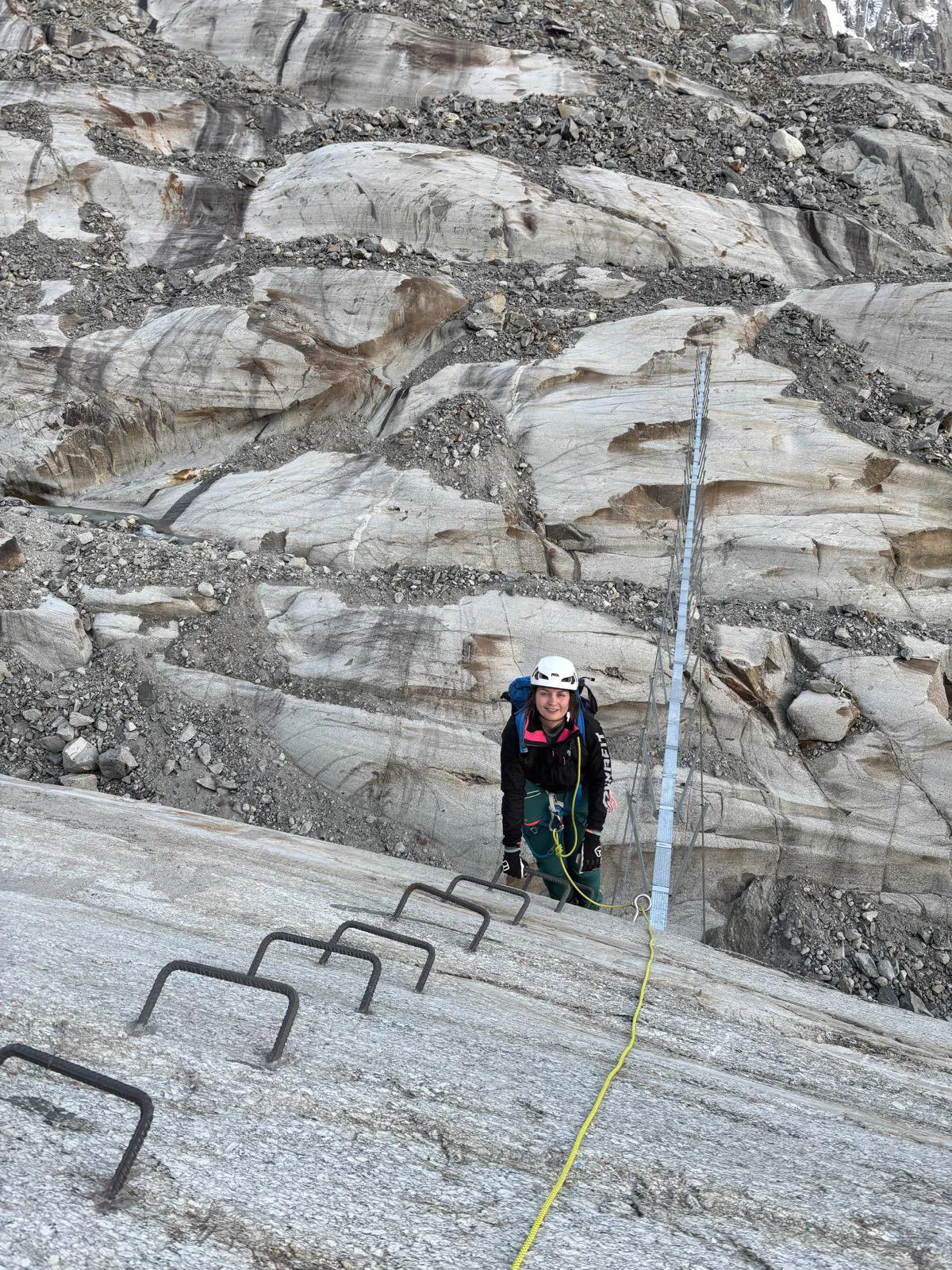
Alright, off we go in the direction of Leschaux, which means crossing two pretty scary monkey bridges that had one of the more serious signs that I have yet to see in this valley. By the way, there were pigtail hooks next to the ladders that we had hooked our rope into previously but it didn’t say anywhere that we had to. This sign (that I forgot to take a picture of) made it very clear that we had to clip ourselves into the cable running across twice. Now, I had my personal anchor ready to go, but it’s a single one. We had known beforehand that we would need to clip in twice and so I proceeded as I had planned: I made a second impromptu personal anchor with a sling and a locking-gate carabiner.
On a side note, a personal anchor with a sling is a little dangerous because slings are static, and under big sudden tension (like a fall) they can break. So you should never use one as your normal personal anchor. If you have to use one for some reason, make sure to always keep it under tension. In hindsight, I didn’t quite do that here, the sling anchor was almost the same length as my normal (dynamic) one and it was not under tension while I was crossing that bridge. If I were to do it again, I would probably halve the length of my sling to have that under tension, even though it’s probably a bit more annoying to walk then.
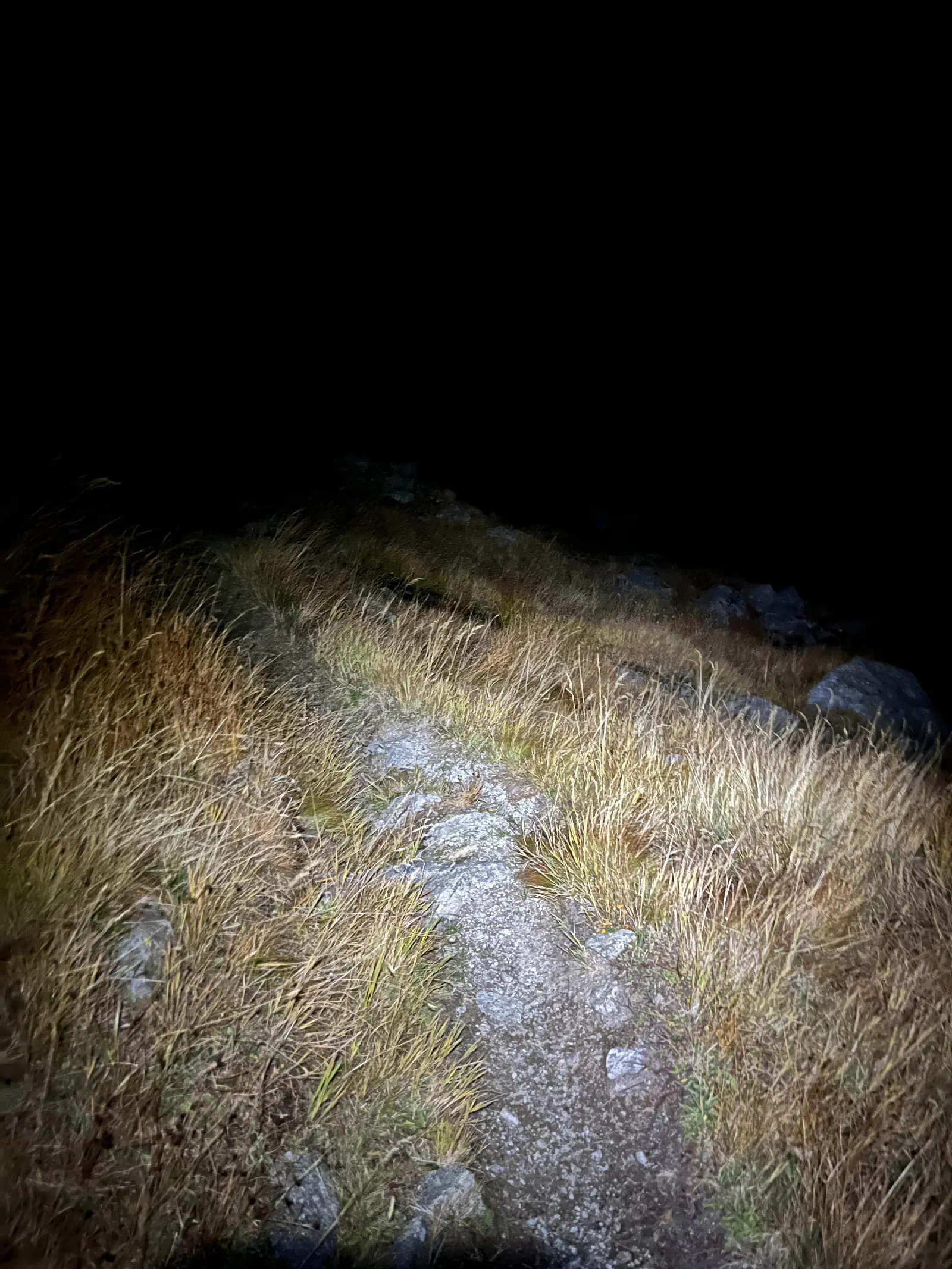
We got off the bridges and onto the path (almost, we went the wrong way around a hill once but we did find the right path eventually) and realised that it’s still quite a way to the refuge. My partner who has plenty of experience getting caught by nightfall while camping explained that we needed to move as quickly as we safely could while we had light, and when things started to get black-and-white, to take out our head lamps and go very slowly. Sounds great, except for one small thing: we were knackered. Those ladders had really taken a toll on our legs. So, going as quickly as safely possible was… not very quick.
We also discussed what alternatives we had, including bivouacking somewhere. But we didn’t have a tent with us, and only my down sleeping bag, and my partner’s down jacket. So it would have been very cold. Another one would have been going up to Couvercle which was much closer but at least another 200 meters of elevation, so hard no. So we decided to keep going. In those moments, I tend to go into what I call donkey mode, I just stubbornly put one foot in front of the other until we’re there. My partner does not go into donkey mode so we took two breaks when he needed them. He also told me later that he usually stops when passing running water (we crossed so many streams! Often on metal steps drilled into the rock! Not great during the day, worse at night!) in order to refill but he thought I might kill him if he suggested it. I don’t think I would have killed him, I think I would have cried.
Anyway, around 9:30, we made it to the hut. And I did not cry when we got there to see a sign saying that the winter access is from the other side, with no way of getting there. Getting to the other side included climbing under the space that has the little terrace in summer (removed so it wouldn’t get destroyed by snow) and balancing on a pretty small piece of concrete, but we did it with no injuries.
Yay! We had made it!
My idea of having a lovely dinner on the terrace with a view of the gorgeous mountains there were dashed twice: firstly, there was no lovely view of the mountains because it was night, but there was an amazing night sky. We could see the Milky Way! Secondly, it turns out that the camping food is so specialised that the slightly different temperature that water boils at up hight might lead to problems with the food cooking. If you put pasta in a pot and cook it at 92 degrees instead of a 100, that will probably take a little longer but eventually, it will cook. This did not happen with our food, probably because the water got too cold to still cook pasta (or rice) before the cooking was done. So we had some very crunchy noodles, some very crunchy rice, and a really just bad potato soup, though that one at least finished cooking. It was still the worst out of the three.
While we were eating, one of the people who were already sleeping in the hut came out to have a smoke and we chatted for a while. We learned that they had seen our head lamps and so expected two more people to come, that the gardienne had come earlier this day to shut off the water so that the pipe wouldn’t burst over the winter but that they had filled up a couple of pots before, and that the toilets had also just been closed. We spent a long time just chatting away about the valley and living in it. He professionally searches crystals and so knows the valley (and mountains) extremely well.
Despite all the things going wrong, it was a wonderful evening.
And then came the night, where I didn’t use my sleeping bag because it’s loud and I didn’t want to wake up even more people, there was lots of snoring, a middle-of-the-night dump needed taking, mattresses that were thin enough that I needed to turn every couple of minutes because my hips hurt, and all in all, I slept very very little.
Second day
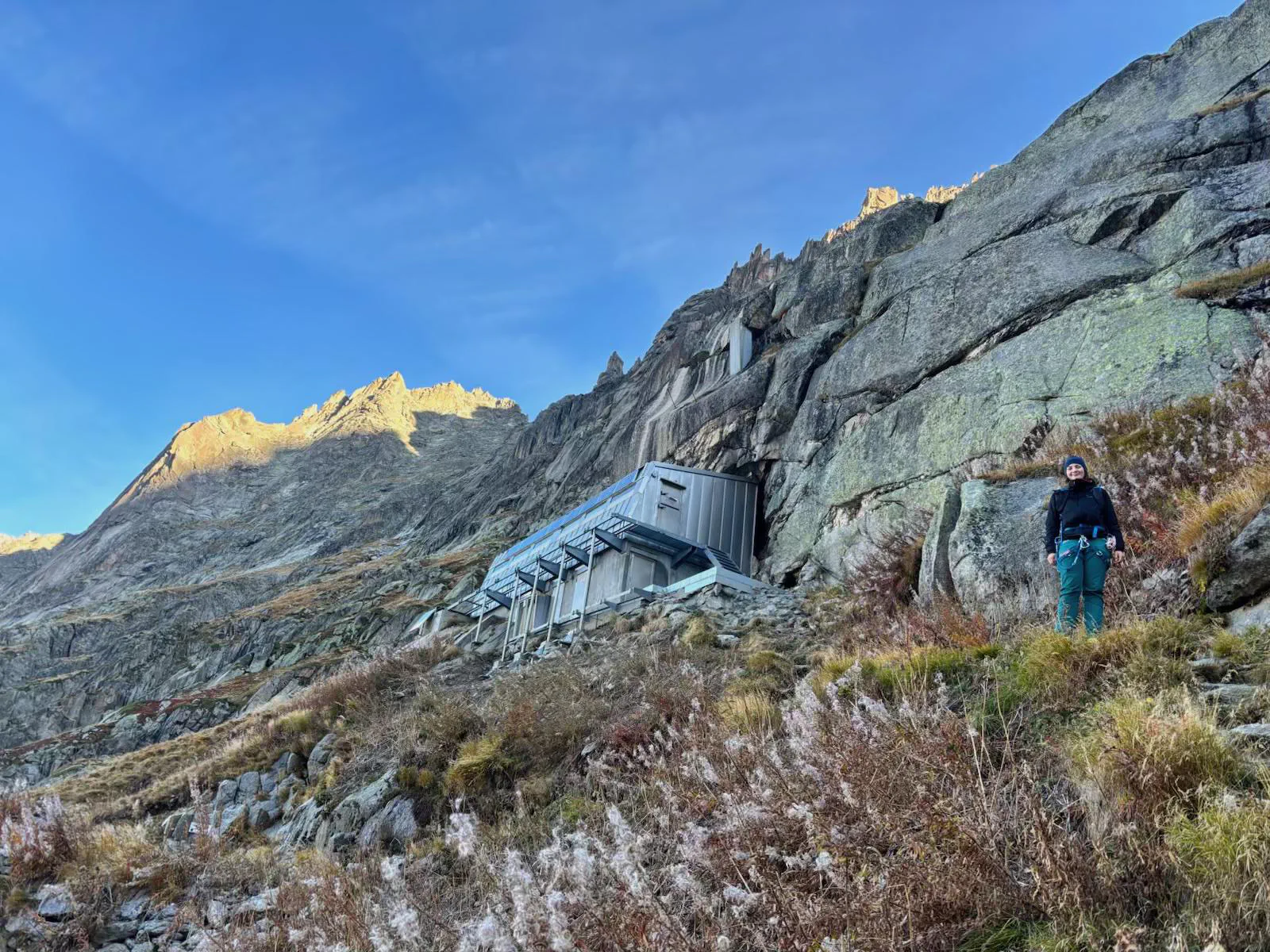
We started our second day by taking some of the previously collected water to make our breakfast. The muesli with some hot water added it to it was great (oats don’t need to boil), the fancy pour-over coffee was not. By the time it was luke-warm, it tasted like coldbrew. So, if you’re into coldbrew on a cold morning in the mountains, that might be just right.
We had learned the night before that the ladders directly below the refuge were totally fine, which was a big relief because we really really really did not to go back the very long access with lots of zig-zagging up and down, to the two bridges, to climb down those hard ladders (though we tested going down the ladders on the first day - pretty fine, it’s only up that they’re a problem). There may or may not have been some serious and slightly delirious discussions about breaking a leg so that the helicopter would pick us up.
So, after breakfast, we packed up our stuff, swept up half the hut until our cristallier buddy who had spent five days there took over, and headed straight down the ladders onto the Glacier de Leschaux. We made it to a somewhat clean part of the glacier that was lovely to walk on with crampons.
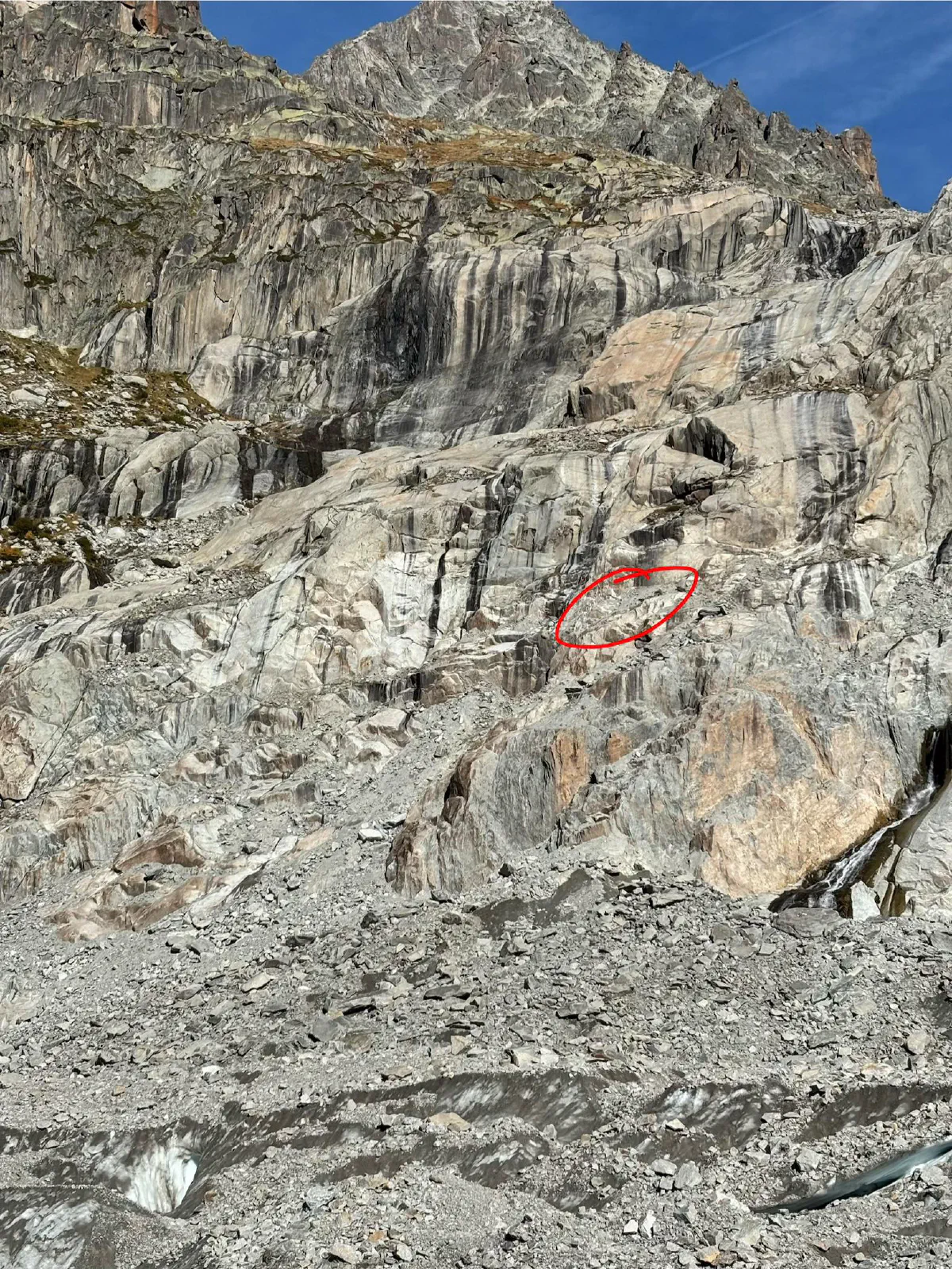
When passing the access that we had used the previous day, we tried our best to see it, now knowing where it is. We absolutely failed. We only ever saw the fences that are encircled in red in the picture, and a ladder right between them. We did not manage to see the ladders where the access starts, but they are below the right end of those fences.
The rest of the way back was stunning views and complaining about the Mer de Glace being so covered in rocks that it’s basically scrambling to move there. We had left the hut around ten and made it to the lift (that had just reopened) a bit before three, and that was while skipping a big lunch and instead just nibbling on chocolate and chocolate bars and nuts.
What did we learn
Access
Man, make sure to get that access line on a map that you can read if you don’t know it. Those 1.5 hours looking for it were time that we really didn’t need to waste.
Also, we probably should have just asked if the “old” ladders below the hut were still fine as well, and we might have then decided to take those to get to the hut and then use the new access for the way home. Then again, we might not have because rain was announced to happen around 3pm.
Food
We guessed that we would need a substantial amount of calories for dinner, so something like 800-1000 a person. Most of the camping meals that we found had between 500 and 600 calories, so we got three of those for dinner, plus nuts and chocolate. For the breakfast, we got two camping mueslis.
The calories were fine but the food itself wasn’t. We asked our cristallier buddy what he usually eats, and he mostly brings bread, cheese, and meat, and will sometimes cook noodles. But he also has a more traditional camping stove on which you can somewhat cook. The Jetboil that we have is really really efficient for boiling water, but not for anything else really. My partner apparently tried making pasta in it once and it actually burned on the sides of the pot.
We decided that our next time, we’ll mostly bring bread and cheese, and maybe some hardboiled eggs. And then as an additional warm thing in the evening maybe some instant soup or Asian noodles or some of those snack foods that come in a plastic container that you just throw boiling water onto and wait a while.
We also figured that tabouleh might work because it can be made with tepid water.
For the coffee, my partner has some good instant coffee that he’ll bring next time.
Water
We decided to bring 7.5 litres of water, 3.5 in our bladders, 2 more in our refillable water bottles, and 2 more bought at the supermarket that can be crunched down when they’re empty. Of that, 1.5 was planned for cooking our food (which of course also means that we still ingest it), and then 2l each for the way up, 1l each for the way down.
This plan did not include an extremely exhausting access, so we arrived having drunk 4.5l of water instead of the planned 4l. Luckily, there was still some water at the hut that we could use, and we actually only drank about 1l instead of the planned 2l on the way back to Montenvers.
What did we learn? We really should find out if there is a source to refill, because our backpacks were very heavy.
Packing
The hut’s website said that there are blankets but I was quite worried about being cold, so I packed my pretty small down sleeping bag in addition to the liner that you always bring for a hut. I then didn’t use that sleeping bag because I didn’t want to rummage around my backpack any more and wake up more people. I know, a bit silly in hindsight. I was okay warmth-wise with two blankets over my sleeping-bag liner, but I probably would have been more comfortable with my sleeping bag. I would probably do the same again, and actually use my sleeping bag next time.
We also brought one whole change of underclothes (socks, long underpants, baselayer shirt, panties, bra) in a tightly closed plastic bag so it can’t get wet. I closed mine so tightly that the bag split at some point on the way. Luckily, we didn’t get wet, so that at least wasn’t a problem. It was a bit awkward to change into fresh underclothes because the refuge is one room but it’s also really nice. It would have also been really nice to swap my sweaty, wet bra in the evening when we arrived but I didn’t think of it at the moment, and then was too comfy sitting outside chatting away. I think I would do that again but try to not squeeze the plastic bag so much that it bursts.
We brought phone chargers because they weigh nothing and every refuge website I have looked at so far has said that they have no electrics sockets, and every manned refuge I have been to so far has some limited sockets. I assume that those are solar-powered, so you shouldn’t rely on them in bad wheather but I’m very much a fair-wheather alpinist, so I have no plans to be in a refuge in the rain. I guess you also can’t charge at night. Anyway, we decided to take the chargers just in case, but also keep our phones in low-battery and airplane mode, and that was a good idea because there were in fact no sockets in the winter hut. I would probably do the same again.
The classic thing to bring in the mountains in terms of outer layers is a down jacket and a rain jacket. The down is the main thing keeping you warm, but if down gets wet, it doesn’t store heat very well anymore, and that’s where the rain jacket comes in (which also does additional wind protection). Since I knew that it wasn’t going to get incredibly cold, and no rain was forecast, I decided that my Arcteryx Atom jacket would be enough, since it does a great job of keeping me warm while also protecting me from at least a light drizzle (and from wind). I was wearing a pretty warm fleece that is meant for ski touring under it. With a less warm fleece, I probably would have needed a down and waterproof combo, but it worked very well like this. Also if it was colder, it would have been too cold. All in all, it worked very well for me to only have one jacket but that’s a sometimes thing.
Toilets
Firstly, I learned that not everyone packs up their toilet paper in the mountains, but I’m also slightly mystified what these guys (and they were all guys) were doing with like half a single sheet of toilet paper. I didn’t ask them.
Secondly, the dog bags for toilet paper worked reasonably well but after three or four fillings, you probably want to start a new one because it get’s gross and tricky to open. I have once seen a woman with a zip-lock bag which might be a great solution. I’ll have to try that. Might also be separate zip-locks for my partner and me.
A surprising thing that I hadn’t really considered before getting to the hut: I would have preferred taking a dump on the way (obviously, somewhere below the trail, far from water sources) because I wasn’t too comfortable with the possibility of other people at the hut stumbling over my poop. Unfortunately, my bowels disagree with that idea, they like to be comfortable before relaxing (usually). And the problem didn’t occur to me until after we had gotten to the hut.
Would I do it again?
Absolutely! But I would probably take the older access below the hut to get there, and then MAYBE take the newer one for the way back. Might also steer clear of the Mer de Glace for this fall, in the hopes that it will be a bit less rock-covered in late spring / early summer next year, so after a season of snow as opposed to a season of melting and rock slides. But then again, with the climate crisis, walking on the ice of a glacier just like that might already be over for the Mer de Glace.